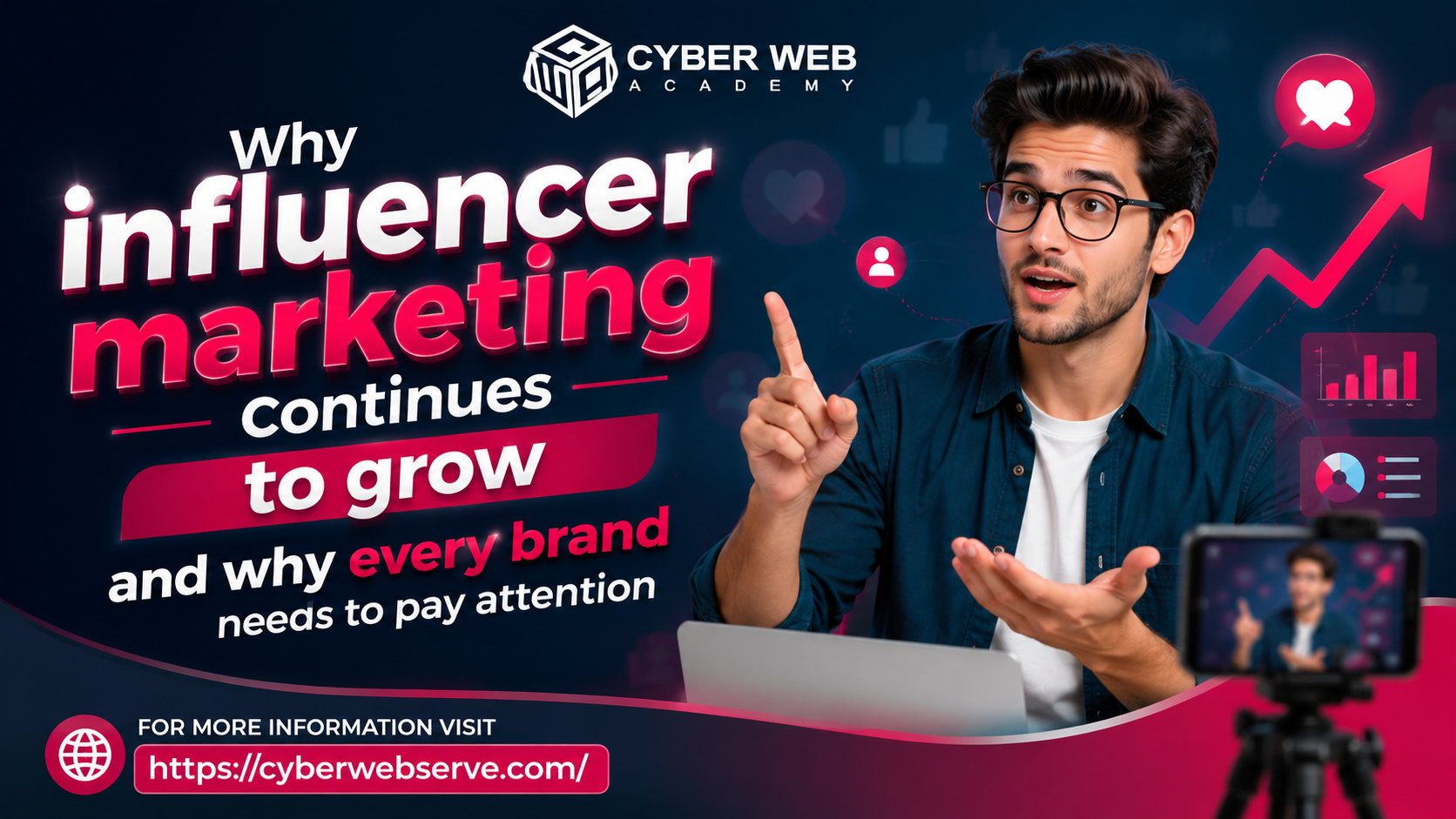
Every year, experts predict influencer marketing will plateau. Every year, it grows larger. The reason is simple: trust does not follow algorithms — it follows people. And as long as audiences trust creators more than brands, influencer marketing will keep expanding.
Whether you’re running a business, working at a digital marketing agency , exploring digital marketing jobs, or enrolling in a digital marketing course — understanding why this channel keeps growing is no longer optional. It’s the foundation of modern digital marketing
What is digital marketing and why does influencer marketing keep winning?
Digital marketing covers every online channel used to reach and convert customers — SEO, email, paid ads, social media, content marketing, and more. Among all these digital marketing services, influencer marketing has consistently outperformed the rest in one critical area: authentic human connection.
While paid ads interrupt, and branded content often feels scripted, influencer marketing fits naturally into the content people already choose to consume. That seamlessness is why it keeps growing — even as audiences become more resistant to traditional advertising.
7 reasons why influencer marketing continues to grow
Trust is the scarcest resource in digital marketing
Audiences have grown deeply skeptical of branded content. Influencers carry the trust that brands can no longer manufacture. When a creator recommends something, it lands like a friend’s advice — not an ad.
Hyper-targeted reach that traditional digital marketing services can’t match
Every influencer is a niche audience in human form. Whether it’s skincare, tech, fitness, or finance — brands can reach precisely the right people without wasting a rupee on irrelevant impressions.
ROI that consistently outperforms paid ads
Study after study confirms influencer campaigns deliver higher returns than most conventional digital marketing channels — especially for awareness, purchase intent, and long-term brand recall.
Micro and nano-influencers have unlocked a new scale
Smaller creators with 1,000–100,000 followers drive some of the highest engagement rates in digital marketing. They’ve made influencer marketing accessible to brands of every size — not just those with big agency budgets.
Short-form video is still accelerating
TikTok, Instagram Reels, and YouTube Shorts have created the perfect environment for influencer content. As screen time on these platforms grows, so does the reach and impact of every creator campaign.
Shoppable content has closed the discovery-to-purchase gap
Platforms now allow influencers to embed direct purchase links into their content. The friction between “I saw it” and “I bought it” has nearly disappeared — turning every influencer post into a live digital marketing service.
AI and data tools are making campaigns smarter
Advanced analytics and AI-driven matching platforms now help brands find the right creators faster and measure results with precision — removing much of the guesswork that once held brands back from investing in this digital marketing channel.
How consumer behavior keeps fueling this growth
What is digital marketing without understanding the customer? Today’s buyers tune out banners, skip pre-rolls, and distrust polished campaigns. They respond to three things: personalized messaging, peer recommendations, and visual storytelling in relatable contexts. Influencers deliver all three simultaneously — which is precisely why every serious digital marketing course now dedicates significant modules to creator strategy.
Emerging trends keeping influencer marketing ahead
The next wave of influencer-led digital marketing is already forming. Virtual AI influencers — entirely digital personas — are emerging as a novel way for brands to engage audiences without the unpredictability of human talent. Meanwhile, metaverse integration is creating entirely new promotional stages, and long-term creator partnerships are replacing one-off posts as the standard model for any forward-thinking digital marketing agency.
Real brands proving this growth is real
Facing declining relevance among younger audiences, CoverGirl overhauled its digital marketing strategy — replacing traditional campaigns with dedicated TikTok content studios and a network of micro and nano-influencers. The result was honest, relatable content that felt nothing like advertising. Market share stabilized, and the brand saw renewed momentum on Amazon among younger shoppers — a direct outcome of making influencer marketing a core digital marketing service, not an experiment.
Sol de Janeiro — $1B through authentic digital marketing
Instead of a single big campaign, Sol de Janeiro activated over 6,000 creators to share short, genuine TikTok videos about their signature fragrances. No scripts, no glossy production — just real people, real reactions, real reach. The content didn’t feel like digital marketing. It felt like genuine excitement. And that authenticity is what made it go viral — delivering 850 million views and tripling sales past $1 billion in revenue.
What this means for digital marketing jobs
The sustained growth of influencer marketing has directly expanded the landscape of digital marketing jobs. Roles like influencer marketing manager, creator partnerships lead, social content strategist, and campaign analytics specialist are among the fastest-growing positions at any digital marketing agency today. If you’re building a career in digital marketing, influencer strategy is one of the highest-value skills you can develop — whether through a digital marketing course, hands-on agency work, or in-house brand experience.
Finding the right digital marketing agency to grow with
When searching for a digital marketing agency near me or online, prioritize those that treat influencer marketing as a core offering — not an add-on. The best digital marketing agencies combine data-driven targeting with authentic creator relationships, transparent performance reporting, and a genuine understanding of the platforms where your audience spends their time.
Top 5 frequently asked questions
Why does influencer marketing keep growing even as digital marketing evolves?
Because trust doesn’t scale with ad spend — it scales with relationships. As audiences grow more resistant to traditional digital marketing formats, the value of genuine creator recommendations only increases. Influencer marketing grows because it solves the one problem no algorithm can fix: making people actually believe what they hear.
Is influencer marketing suitable for small businesses, or just big brands?
It’s one of the most accessible digital marketing services for small businesses. Micro and nano-influencers are affordable, highly targeted, and often deliver better engagement than celebrity campaigns. A small brand with the right creator partnership can outperform a major brand running generic paid ads.
How do I measure the success of an influencer campaign?
Track engagement rate, reach, click-through rate, conversion rate, and ROI. For brand awareness goals, monitor reach and impressions. For sales, use unique promo codes or trackable links tied to each creator. Any good digital marketing agency will include these metrics in standard campaign reporting.
What digital marketing course covers influencer strategy well?
Look for courses on platforms like Google Digital Garage, HubSpot Academy, Coursera, or LinkedIn Learning that include dedicated modules on creator partnerships, social media strategy, and campaign analytics. A well-rounded digital marketing course should treat influencer marketing as a core channel, not a bonus topic.
What are the biggest challenges brands face in influencer marketing?
The three most common challenges are fake followers (inflated audience numbers that mislead brands), audience fatigue from over-sponsored content, and FTC disclosure compliance. A reputable digital marketing agency will vet creators carefully, structure campaigns for authenticity, and ensure every paid partnership is properly labeled.
Conclusion
Influencer marketing isn’t growing despite the evolution of digital marketing — it’s growing because of it. As platforms multiply, attention fragments, and ad fatigue deepens, the brands that win are the ones that invest in real voices, authentic stories, and creator relationships built on genuine trust.
From global giants like Sol de Janeiro to comeback stories like CoverGirl, the evidence is consistent: influencer-led digital marketing services deliver results that no polished ad campaign can replicate. The numbers keep climbing. The digital marketing jobs keep expanding. The strategy keeps proving itself.
Whether you’re looking for a digital marketing agency near me, enrolling in a digital marketing course, or building your brand’s next campaign — understanding and investing in influencer marketing isn’t a trend. It’s the direction the entire industry is moving.