Introduction
Social media marketing is the practice of using social media platforms like Facebook, Instagram, and YouTube to promote your business, products, or services. It’s one of the most powerful ways to reach customers today because billions of people spend hours daily scrolling through their favorite apps. Whether you’re a student exploring a digital marketing course, a small business owner, or someone curious about how brands grow online, understanding social media marketing is essential in today’s digital world. In this complete guide, you’ll learn what social media marketing is, how it works, which platforms to use, and how you can start using it effectively—even if you’re a complete beginner.
What Is Social Media Marketing?
Social media marketing (SMM) is when businesses or individuals use social media platforms to connect with their audience, share content, and promote their offerings. Unlike simply having a personal Facebook or Instagram account where you share photos with friends, social media marketing is strategic and goal-focused.
Real-life example: Think of a local coffee shop in your neighborhood. They create an Instagram account, post beautiful photos of their coffee and pastries, share customer reviews, run special discount offers, and reply to comments from followers. That’s social media marketing in action! They’re using Instagram as a tool to attract more customers and build relationships.The key difference: Social media is just the platforms (Facebook, Instagram, etc.). Social media marketing is using those platforms intentionally to grow your business or personal brand. Many people now take a social media course to learn these strategies professionally
Why Social Media Marketing Is Important Today
Growing Number of Social Media Users
Social media isn’t just popular—it’s massive. Worldwide, over 4.5 billion people use social media, and in India alone, hundreds of millions are active daily. Every year, these numbers grow as more people get smartphones and internet access. This means your potential customers are already online, scrolling and searching.
Where Your Customers Spend Time Online
People aren’t just on social media—they’re spending serious time there. Whether it’s Facebook for connecting with family, Instagram for inspiration and shopping, YouTube for entertainment and learning, LinkedIn for professional networking, or WhatsApp for communication, these platforms have become part of daily life. If your business isn’t on social media, you’re missing out on conversations happening about products exactly like yours.
Cost-Effective Marketing for Small Businesses
Traditional advertising like TV commercials or newspaper ads can cost thousands of rupees. Social media marketing offers both organic (free) and paid options. You can start posting content for free and only spend money on ads when you’re ready. Even small budgets of ₹500-₹1000 can reach thousands of targeted people. This makes it perfect for startups, local shops, and freelancers who want to grow without breaking the bank.
How Social Media Marketing Works
Creating Social Media Accounts
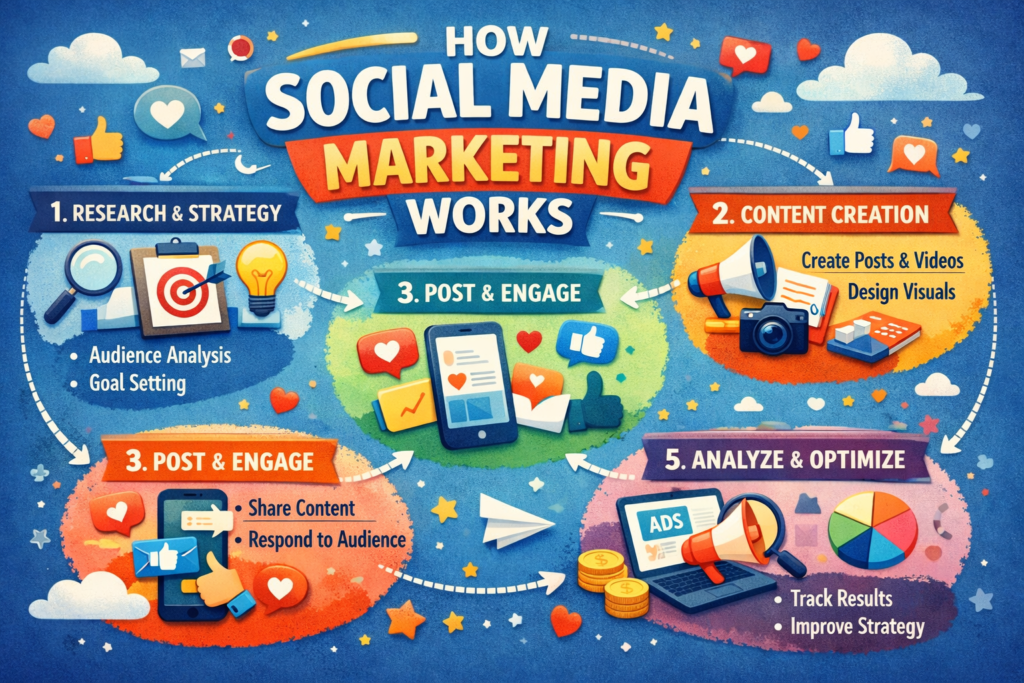
The first step is setting up business profiles on platforms where your audience hangs out. Unlike personal profiles, business accounts give you access to analytics, advertising tools, and professional features. For example, an Instagram business account shows you how many people viewed your posts and when your followers are most active online.
Content Creation
Content is the heart of social media marketing. This includes images, videos, reels, stories, carousel posts, and written captions. The goal is to create content that educates, entertains, or inspires your audience. Consistency matters—posting regularly keeps your brand visible and helps build trust. Many professionals enhance their skills through a WordPress course to create better content or an advanced SEO course to understand what content performs best.
Audience Engagement
Social media is a two-way conversation. When people like your posts, leave comments, share your content, or send direct messages, engaging back is crucial. Responding to questions, thanking people for positive feedback, and addressing concerns builds relationships and loyalty. This human connection is what makes social media marketing more powerful than traditional advertising.
Paid Social Media Advertising
While organic content is free, paid advertising helps you reach more people faster. You can boost existing posts to show them to more users or create targeted ad campaigns aimed at specific age groups, locations, or interests. Paid ads are especially useful when launching new products or running time-sensitive promotions. Learning these skills properly often requires taking an email marketing course or AdSense course alongside social media training.
Popular Social Media Platforms for Marketing
Facebook Marketing
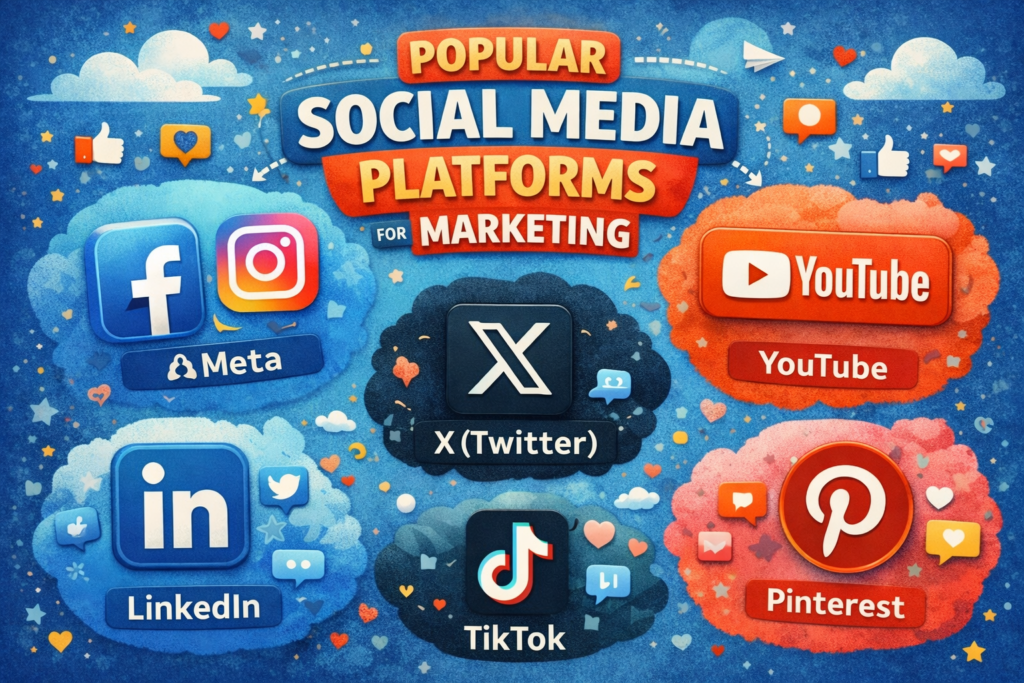
Facebook remains the largest social media platform with billions of users globally. Businesses use Facebook Pages to share updates, Facebook Groups to build communities, and Facebook Ads to reach specific audiences. It’s excellent for reaching a broad demographic, from teenagers to senior citizens.
Instagram Marketing
Instagram is visual-focused and perfect for brands with strong imagery—fashion, food, travel, fitness, and lifestyle businesses thrive here. Features like Reels (short videos), Stories (24-hour content), and influencer partnerships make Instagram essential for modern marketing. Many young entrepreneurs now take a social media course focused specifically on Instagram strategies.
YouTube Marketing
YouTube is the second-largest search engine after Google. Video content dominates here—from tutorials and product reviews to vlogs and entertainment. Businesses create channels, upload valuable videos, and can even monetize their content. YouTube Shorts also compete with reels and TikTok videos for quick engagement.
LinkedIn Marketing
LinkedIn is the professional network, making it ideal for B2B (business-to-business) marketing, recruiting, and personal branding. Companies share industry insights, connect with potential clients, and establish thought leadership. Professionals and freelancers use LinkedIn to showcase their expertise and attract opportunities.
Twitter (X) Marketing
Twitter, now called X, thrives on real-time conversations and trending topics. Brands use it to share quick updates, engage in current events, provide customer service, and show their personality. A witty, authentic brand voice works well here.
Types of Social Media Marketing
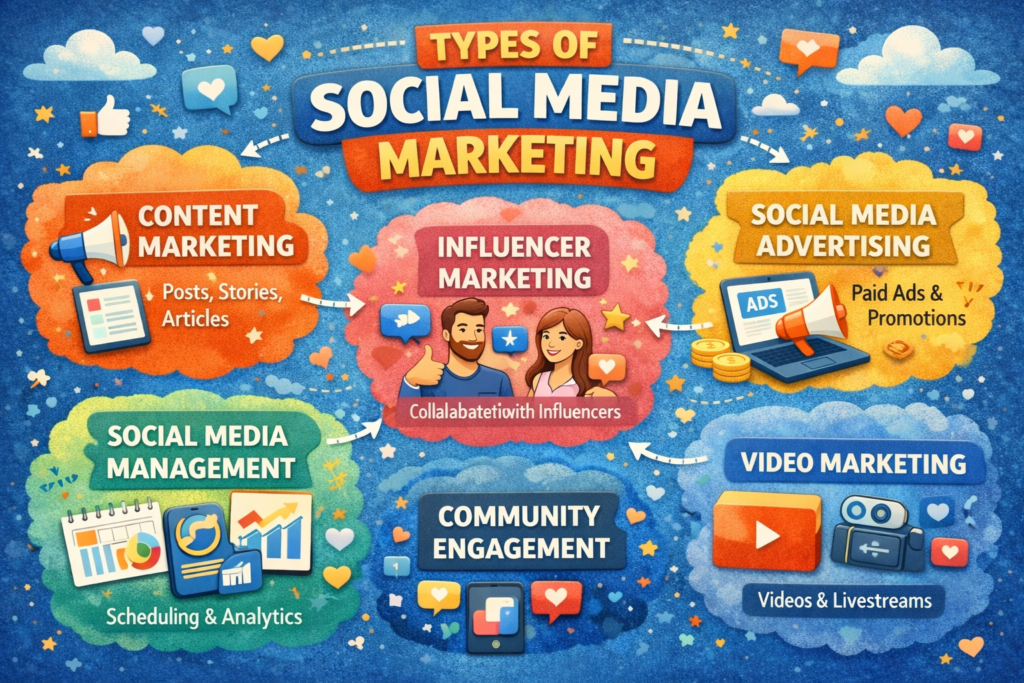
Organic Social Media Marketing
Organic marketing uses free methods—regular posting, engaging with followers, sharing user-generated content, and growing your audience naturally. Results take time but build genuine, long-term relationships. This approach requires patience and consistent effort.
Paid Social Media Marketing
Paid marketing involves spending money on advertisements and promoted posts. You get faster results, precise targeting options, and measurable outcomes. Most successful brands combine both organic and paid strategies for maximum impact.
Influencer Marketing
Influencer marketing partners your brand with social media personalities who have dedicated followings. Micro-influencers (10,000-100,000 followers) often have highly engaged audiences, while macro-influencers (100,000+ followers) offer broader reach. Collaborations can include sponsored posts, product reviews, or brand ambassadorships.
Benefits of Social Media Marketing
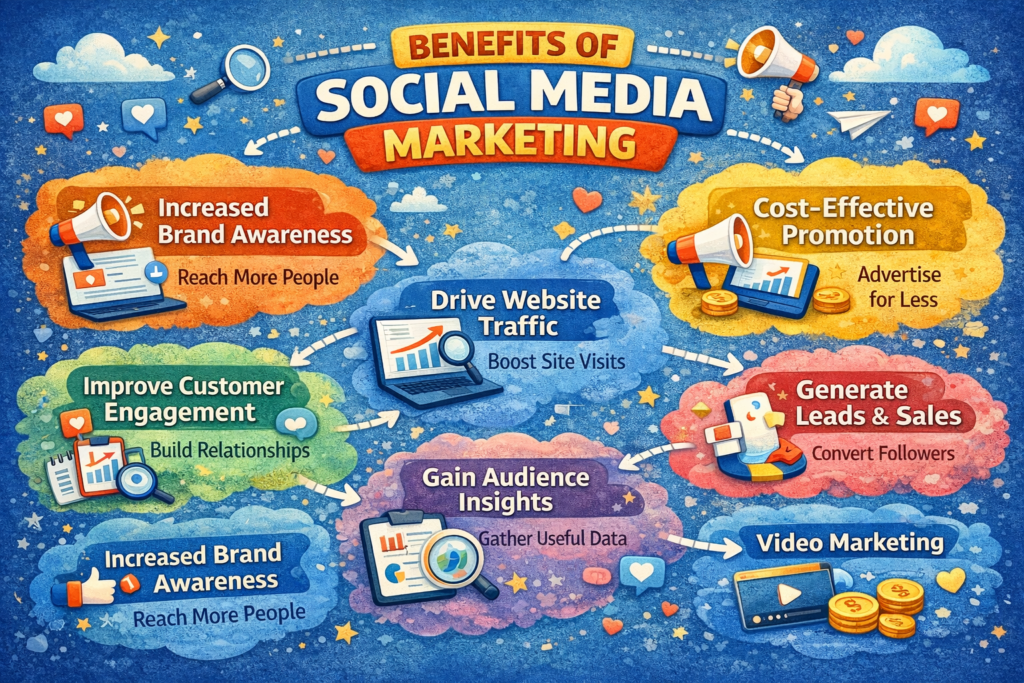
Social media marketing offers numerous advantages. It increases brand awareness by putting your business in front of thousands of potential customers. It drives website traffic when you share links to your blog, products, or services. It generates leads through forms, messages, and contact requests. It directly increases sales when customers discover and purchase products through social platforms. Most importantly, it builds customer trust and loyalty through consistent communication and valuable content sharing.
Social Media Marketing Strategy Step-by-Step
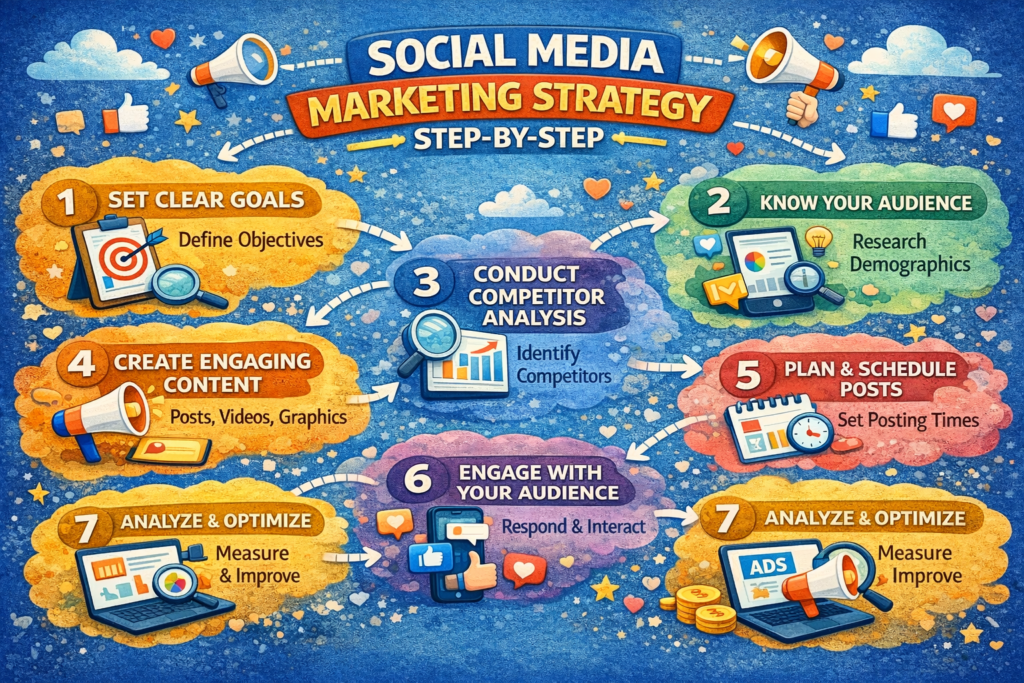
Set Clear Goals
Define what you want to achieve. Are you focused on brand awareness, generating leads, driving sales, or growing your community? Clear goals help you measure success. Someone learning through a digital marketing course would start here.
Identify Target Audience
Who are your ideal customers? Consider age, gender, location, interests, income level, and problems they need solved. The more specific you are, the better you can create content that resonates with them.
Choose the Right Platforms
You don’t need to be everywhere. Focus on 2-3 platforms where your target audience is most active. A B2B company might prioritize LinkedIn, while a fashion brand focuses on Instagram and Pinterest.
Create a Content Calendar
Plan your posts in advance. A content calendar helps you maintain consistency, plan for holidays and events, mix different content types, and avoid last-minute scrambling. Decide posting frequency—whether daily, three times weekly, or whatever you can sustain.
Track Performance
Use platform analytics to monitor what works. Check reach (how many people saw your content), engagement (likes, comments, shares), click-through rates, and conversions. Adjust your strategy based on these insights. This analytical thinking is also taught in an advanced SEO course or SEO Course Amritsar programs.
Tools Used in Social Media Marketing
Several tools make social media marketing easier. Canva helps create professional-looking graphics without design skills. Meta Business Suite manages Facebook and Instagram from one dashboard. Hootsuite and Buffer schedule posts in advance across multiple platforms. Google Analytics tracks website traffic from social media. ChatGPT and AI tools help generate content ideas and write captions faster.
Common Social Media Marketing Mistakes to Avoid
Many beginners make avoidable mistakes. Posting without a strategy leads to inconsistent messaging and poor results. Ignoring comments and messages damages relationships and trust. Over-promoting products feels spammy—follow the 80/20 rule (80% valuable content, 20% promotional). Not analyzing results means you miss opportunities to improve. Buying fake followers might inflate numbers but brings zero real engagement or business value.
Social Media Marketing for Businesses
Small Business Social Media Marketing
Local shops, restaurants, salons, and startups benefit enormously from social media. It levels the playing field, allowing small businesses to compete with larger companies. Local targeting features help reach nearby customers specifically.
Social Media Marketing for Personal Branding
Freelancers, consultants, coaches, and content creators use social media to build their personal brands. Sharing expertise, showcasing work, and engaging authentically attracts clients and opportunities. This is often covered in detail during a social media course.
Social Media Marketing for E-Commerce
Online stores use social media to showcase products, run promotions, share customer testimonials, and drive traffic to their websites. Features like Instagram Shopping and Facebook Marketplace make direct selling even easier.
Career Scope in Social Media Marketing
Social media marketing offers exciting career opportunities. Common job roles include Social Media Marketing Executive, Content Manager, Social Media Ads Specialist, Community Manager, and Influencer Marketing Coordinator. Freelancing opportunities are abundant—many professionals manage social media for multiple clients remotely.
In India, entry-level positions typically start around ₹15,000-₹25,000 monthly, while experienced professionals earn ₹40,000-₹80,000 or more. The demand is growing as every business recognizes they need strong social media presence.
Many students choose this field after 12th grade or graduation because it doesn’t require engineering or medical degrees, offers creative and strategic work, provides flexible career paths, and teaches valuable skills applicable across industries. Enrolling in a comprehensive digital marketing course, WordPress course, or specialized SEO Course Amritsar can accelerate your learning.
Social Media Marketing vs Digital Marketing
What’s the difference? Digital marketing is the umbrella term covering all online marketing activities—SEO, email marketing, content marketing, paid ads, and more. Social media marketing is one branch within digital marketing, specifically focused on social platforms.Think of it this way: Digital marketing is the entire tree, and social media marketing is one important branch. A complete digital marketing course covers social media along with other channels like search engines and email campaigns.
Future of Social Media Marketing
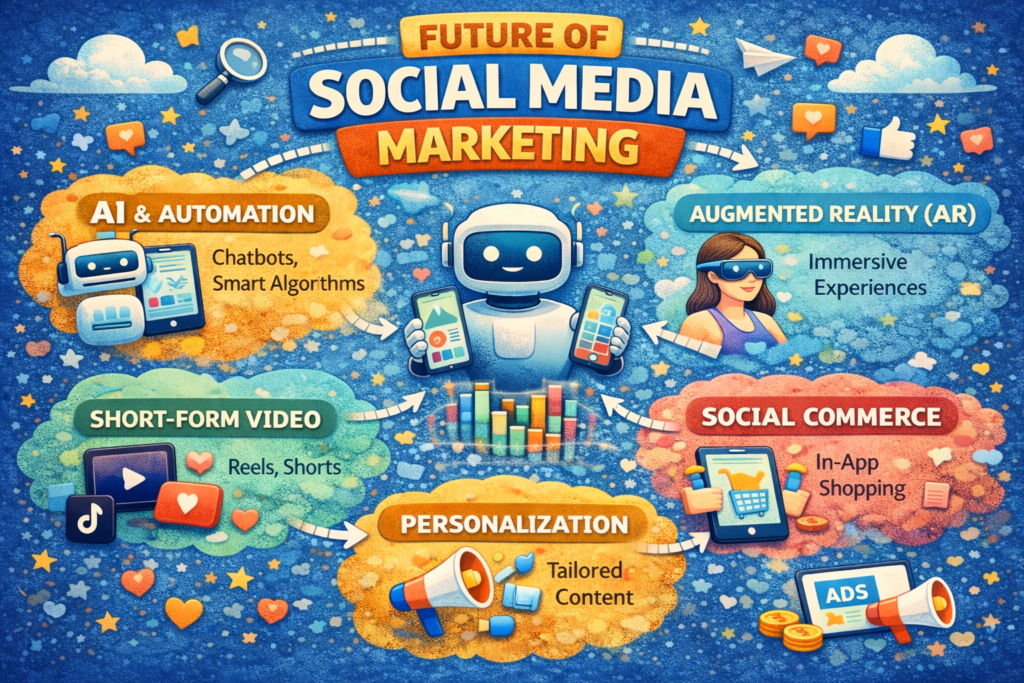
The future looks exciting and technology-driven. AI and automation will handle routine tasks like scheduling posts and basic customer service, freeing marketers for creative strategy. Short-form video content like Reels, Shorts, and TikToks will continue dominating as attention spans decrease. Influencer and community marketing will grow more important as consumers trust peer recommendations over traditional ads. Augmented reality (AR) filters and virtual shopping experiences will become mainstream, making social media even more interactive and immersive.
Frequently Asked Questions (FAQs)
1. What is social media marketing in simple words?
Social media marketing means using platforms like Facebook, Instagram, and YouTube to promote your business, connect with customers, and grow your brand through posts, videos, and advertisements.
2. Is social media marketing free?
You can start for free by creating business accounts and posting organic content. However, paid advertising helps you reach more people faster. Most businesses use a combination of free and paid methods.
3. Which platform is best for beginners?
Instagram and Facebook are beginner-friendly with large audiences and easy-to-use features. Start with one platform, learn it well, then expand to others based on where your audience is active.
4. How long does it take to see results?
Organic growth typically takes 3-6 months of consistent posting to build a meaningful following. Paid advertising can show results within days or weeks. Patience and consistency are key to long-term success.
5. Can students learn social media marketing easily?
Absolutely! Social media marketing doesn’t require technical degrees. Students already familiar with using social media personally have a head start. Taking a structured social media course or digital marketing course helps learn professional strategies faster.
Conclusion
Social media marketing has transformed how businesses connect with customers in the digital age. From understanding what social media marketing is and how it works to exploring different platforms and strategies, this guide covers everything beginners need to know. Whether you’re a student considering a career in digital marketing, a business owner looking to grow, or simply curious about how brands succeed online, social media marketing offers endless opportunities. The best time to start learning is now—consider enrolling in a digital marketing course, social media course, or even specialized training like an advanced SEO course or SEO Course Amritsar to build professional skills. Start small, stay consistent, engage authentically, and watch your online presence grow. Social media marketing isn’t just the future—it’s the present, and everyone can learn to use it effectively.